ALSO IN THE NEWS

Why Hobyo Matters: Somalia's Coastal Gateway to Trade, Investment and Economic Transformation
 0
0
Monday October 12, 2026 - 16:08:13 in Latest News by Super Admin
- Visits: 401
-

- Share
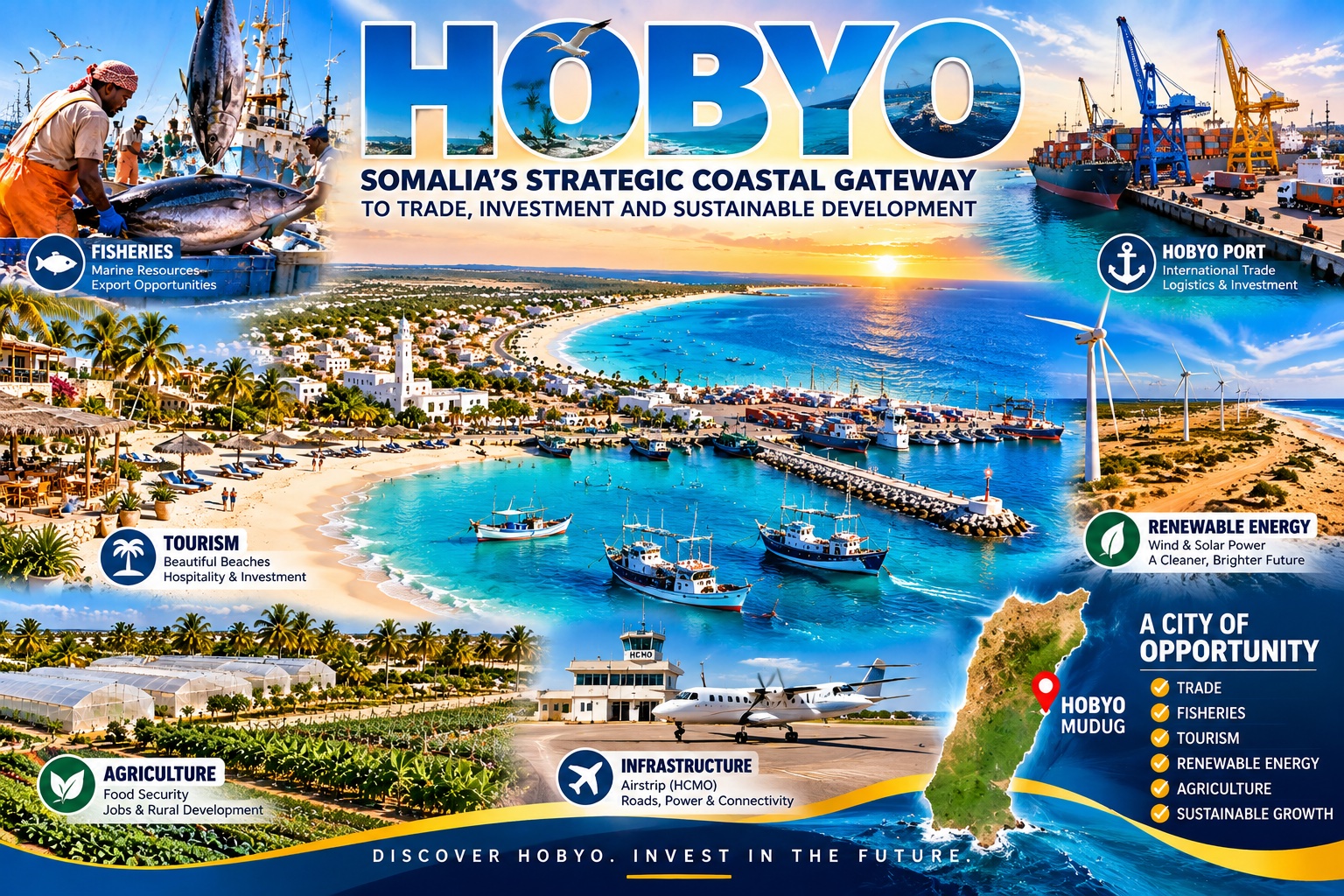

From the proposed Hobyo Port to fisheries, renewable energy, agriculture and tourism, the historic Indian Ocean town could play a significant role in Somalia's economic future.
Hobyo, a historic coastal town in Somalia’s Mudug region, is emerging as a destination of growing economic interest as investors and development stakeholders explore opportunities in maritime infrastructure, fisheries, renewable energy, agriculture and tourism.
Situated along the Indian Ocean in Galmudug State, Hobyo possesses a combination of strategic geography, marine resources and undeveloped commercial potential that could make it an important contributor to Somalia’s long-term economic transformation.
For decades, Somalia’s economic development has been constrained by inadequate infrastructure, limited investment and political instability. Yet coastal towns such as Hobyo offer opportunities to expand commercial activity, create employment and connect local communities with regional and international markets.
The importance of Hobyo extends far beyond its beaches. Its future could be shaped by the development of a commercial port, sustainable fisheries, renewable electricity, agricultural infrastructure and modern tourism facilities.
Hobyo Port: A Potential Gateway to International Trade
One of the most significant initiatives associated with Hobyo’s economic future is the proposed development of Hobyo Port.
The project aims to establish maritime infrastructure capable of supporting commercial shipping, cargo transportation, fisheries exports and logistics services.
Somali private-sector investors have been involved in efforts to advance the port initiative, reflecting the potential role of domestic investment in rebuilding the country’s infrastructure.
If successfully developed, the port could provide businesses in central Somalia with additional access to international shipping services and commercial supply chains.
It could also stimulate investment in warehouses, transportation companies, cargo-handling facilities, seafood-processing plants and other industries dependent on maritime connectivity.
However, the project's eventual economic impact will depend on financing, construction progress, regulatory approvals and the availability of supporting infrastructure.
Fisheries: Unlocking the Potential of Somalia’s Blue Economy
Hobyo’s location along the Indian Ocean provides opportunities for developing Somalia’s fisheries sector.
The surrounding marine environment supports fishing activities, while commercially valuable species such as tuna and lobster present potential opportunities for responsible harvesting, processing and export.
Investment in modern fishing vessels, refrigeration facilities, ice production, seafood-processing plants and transportation infrastructure could strengthen the local fishing industry.
Such developments could help reduce post-harvest losses, improve product quality and increase access to international seafood markets.
For coastal communities, fisheries development also offers opportunities for employment, entrepreneurship and improved household incomes.
Nevertheless, sustainable management will be essential to ensuring that commercial fishing does not undermine marine biodiversity or the livelihoods of traditional fishing communities.
Conservation efforts, including the protection of sea turtles and vulnerable marine habitats, should remain part of any long-term blue economy strategy.
Tourism: An Untapped Coastal Opportunity
Hobyo’s coastline represents another potential source of economic growth.
Its sandy beaches, ocean views and coastal landscapes could support investment in hospitality, beachfront accommodation, restaurants and environmentally responsible tourism.
Tourism development could generate employment in construction, accommodation, transportation, food services and local commerce.
It could also encourage investment in roads, electricity, water supply and telecommunications.
However, transforming Hobyo into a competitive tourism destination would require improvements in visitor infrastructure, transportation accessibility, security arrangements and hospitality services.
Responsible tourism planning would also be necessary to protect the coastline and ensure that local communities benefit from development.
Gawaan: Exploring Renewable Energy Opportunities
Renewable energy could become an important component of Hobyo’s future economic development.
The Gawaan area, within the wider Hobyo region, has been identified locally as a potential location for wind energy investment.
Somalia’s coastal environment offers opportunities to investigate wind and solar power generation, particularly as demand for reliable electricity increases.
Renewable energy projects could eventually support commercial operations at Hobyo Port, seafood-processing facilities, cold-storage infrastructure, agricultural irrigation systems and residential communities.
Reliable electricity would also help reduce operating costs for businesses and improve essential services.
Before major investments proceed, however, developers would need to conduct wind-resource measurements, environmental assessments, engineering studies and financial feasibility analyses.
Xeradhagaxley: Agriculture and Food Security
Agricultural development offers another opportunity to diversify Hobyo’s economy.
Xeradhagaxley, a rural settlement within Hobyo District, has been identified as an area of interest for potential agricultural investment.
Possible projects include irrigated farming, greenhouse cultivation, water-storage infrastructure and agricultural processing.
If suitable groundwater and soil conditions are confirmed, such investments could support local food production, employment and rural entrepreneurship.
Agricultural expansion could also reduce dependence on food transported over long distances and create additional commercial opportunities for farmers and traders.
However, successful development would require careful assessment of groundwater availability, water salinity, soil conditions and environmental sustainability.
Infrastructure and Aviation Connectivity
Hobyo’s development prospects are closely connected to improvements in transportation and public infrastructure.
Road networks, electricity, telecommunications and water systems would all be important for supporting investment and economic activity.
Hobyo Airstrip, identified by the ICAO location indicator HCMO, provides a potential foundation for future improvements in regional aviation connectivity.
Better transportation links could support business travel, tourism, emergency access and the movement of essential supplies.
Improved infrastructure would also help connect Hobyo with other commercial centers in Galmudug and the wider Somali economy.
Investment Opportunities Across Multiple Sectors
Hobyo’s potential lies in the diversity of its economic opportunities.
Rather than depending on a single industry, the town could pursue development across several interconnected sectors.
Port infrastructure could support maritime trade and logistics. Fisheries could create demand for refrigeration and processing facilities. Renewable energy could supply electricity to commercial enterprises, while agriculture and tourism could generate additional employment and investment.
Real estate development, transportation services, retail businesses and hospitality facilities could also benefit from wider economic expansion.
For investors, however, opportunities must be evaluated against practical considerations, including infrastructure availability, land rights, security, regulatory compliance, environmental obligations and commercial feasibility.
Why Hobyo Matters to Somalia
Hobyo’s importance is closely connected to Somalia’s broader need for economic diversification.
The country possesses extensive marine resources and a strategically located coastline, but realizing their economic value requires investment, institutional coordination and sustainable resource management.
Developing coastal economic centers could help expand employment opportunities beyond traditional commercial hubs and strengthen regional economic participation.
For Galmudug State, investment in Hobyo could contribute to infrastructure development, local revenue generation and private-sector growth.
For Somalia as a whole, a successful combination of maritime infrastructure, fisheries, renewable energy, agriculture and tourism could support the expansion of the national blue economy.
Such progress would require cooperation between federal and state authorities, private investors, development institutions and local communities.
The Future of Hobyo: From Potential to Development
Hobyo’s future will ultimately be determined not by the scale of its ambitions but by the successful implementation of economically viable projects.
Port development, fisheries investment, renewable energy, agriculture and tourism each present opportunities, but their success will depend on effective planning, financing, transparent governance and environmental responsibility.
Local communities must also remain central to development decisions.
Employment creation, skills training, infrastructure access and sustainable livelihoods should be among the primary measures of economic success.
Hobyo represents an opportunity to demonstrate how Somalia’s coastal resources can contribute to national development.
With responsible investment and coordinated planning, Hobyo could evolve into an important center for maritime commerce, sustainable industries and regional economic growth.
Its strategic location, natural resources and human potential provide a foundation for that ambition.
The challenge now is to translate those opportunities into lasting development.
HOBYO.ORG — Discover Hobyo. Invest in the Future.


















Why Hobyo Matters: Somalia's Coastal Gateway to Trade, Investment and Economic Transformation
From the proposed Hobyo Port to fisheries, renewable energy, agriculture and tourism, the historic Indian Ocean town could play a significant role in Somalia's economic future.