ALSO IN THE NEWS

From Human Smuggling to Online Exploitation: How Criminal Networks Target Vulnerable Migrants
 0
Thursday November 19, 2026 - 06:44:08 in Latest News by Super Admin
- Visits: 51
-

- Share
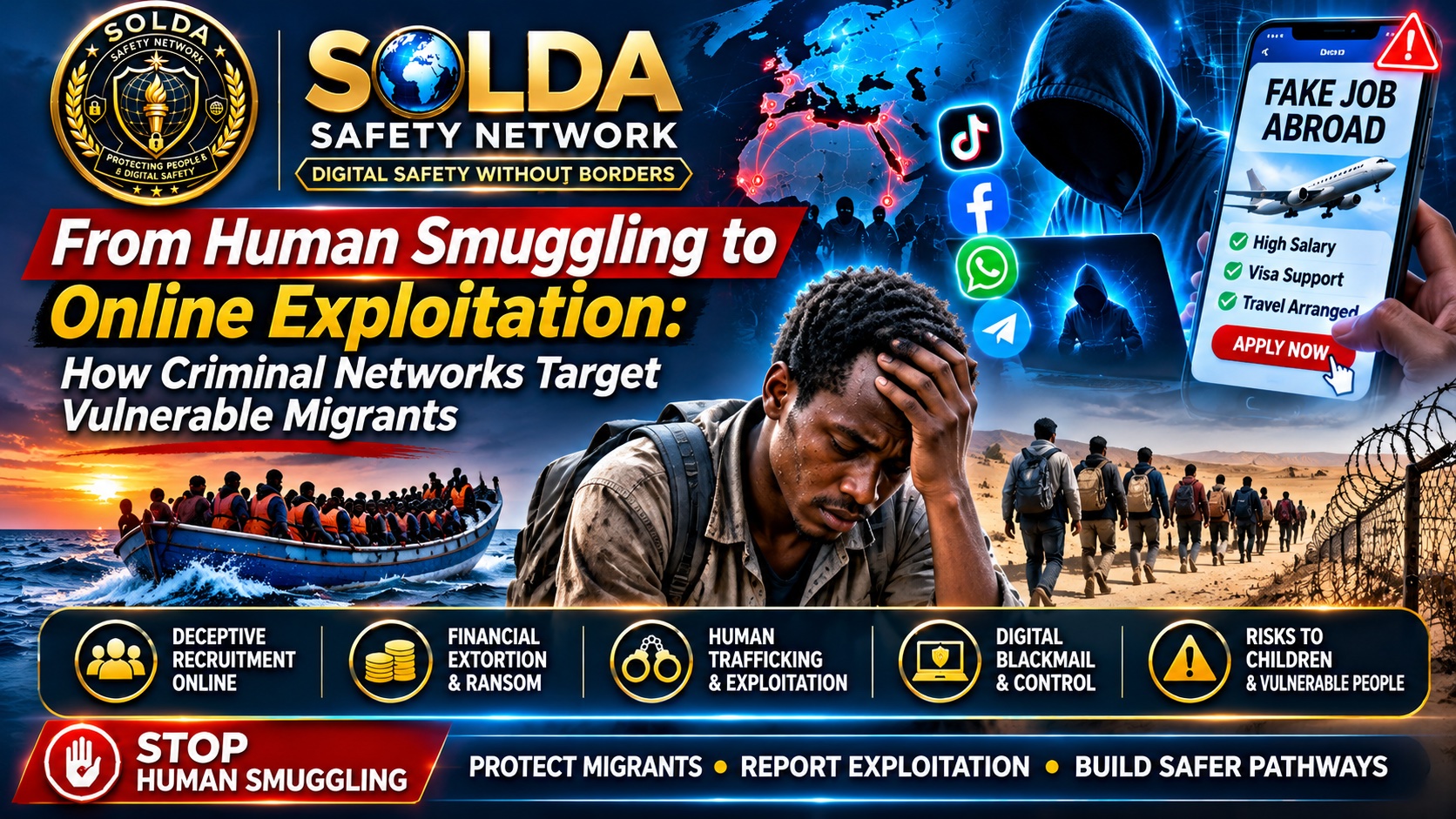

As trafficking and smuggling networks expand their digital operations, vulnerable migrants face growing risks of deception, extortion, surveillance and exploitation.
Breda, The Netherlands
www.solda.org
[email protected]
BREDA, Netherlands | 19 November 2026
Human smuggling and trafficking networks are increasingly exploiting social media, encrypted messaging applications and digital financial systems to recruit, deceive and control vulnerable migrants, according to findings published by European law enforcement authorities and United Nations agencies.
The transformation has created new challenges for migrant protection, particularly along migration routes connecting the Horn of Africa, North Africa and Europe.
For organisations such as the Netherlands-based Stichting SOLDA Safety Network, which has publicly advocated against migrant exploitation since 2016, these developments highlight the growing connection between traditional human smuggling and digital safety.
Criminal Networks Move Into the Digital World
In December 2025, Europol warned that migrant smugglers and human traffickers were increasingly using digital technology throughout their operations.
Criminal groups were found to be using social media advertisements, multilingual recruitment campaigns and encrypted communication services to attract potential victims, coordinate journeys and manage payments.
Some networks also employed digital surveillance and threats to maintain control over trafficking victims.
The findings demonstrate that exploitation can begin long before a migrant reaches a physical smuggling route.
A seemingly legitimate employment advertisement, travel arrangement or online contact may become the first stage of a much wider criminal operation.
False Promises and Financial Exploitation
Migrants seeking employment, safety or family reunification can become targets for criminal intermediaries promising transportation, visas or opportunities abroad.
In some cases, individuals are persuaded to pay substantial fees before discovering that the promised arrangements are fraudulent or dangerous.
Others may face additional demands for money during their journeys, including threats of violence or detention unless relatives provide payments.
Europol has documented how criminal networks combine physical intimidation with financial extortion, exploiting both migrants and their families.
Digital communication allows these demands to cross international borders, increasing the pressure on families who may have limited access to reliable information or legal assistance.
From Smuggling to Human Trafficking
Although migrant smuggling and human trafficking are distinct crimes, criminal activities can overlap.
Migrant smuggling generally involves facilitating unlawful entry into a country for financial or material benefit.
Human trafficking involves exploitation through means such as coercion, deception or abuse of vulnerability. In cases involving children, the legal requirements differ because proof of coercive means is not necessary.
A migrant who initially agrees to pay for transportation may subsequently become a victim of trafficking if subjected to forced labour, sexual exploitation or other exploitative conditions.
Understanding this distinction is essential for accurate reporting, victim identification and criminal investigations.
The Horn of Africa and Mediterranean Migration Routes
For years, migrants from Somalia, Ethiopia, Eritrea and neighbouring countries have faced serious dangers while travelling through parts of North Africa towards Europe.
These risks include unsafe transportation, arbitrary detention, violence, financial extortion and dangerous sea crossings.
In April 2016, UNHCR reported that as many as 500 people were feared dead following a Mediterranean shipwreck.
The tragedy prompted renewed calls for international action against criminal smuggling networks and for safer migration pathways.
SOLDA Safety Network publicly announced an anti-smuggling campaign that same month, calling for accountability and assistance to affected families.
A decade later, the increasing digitalisation of criminal activity presents an additional challenge: protecting migrants not only during their journeys but also during the online recruitment and communication that may precede them.
Online Threats, Blackmail and Digital Control
Digital exploitation can take several forms.
Criminals may use private messages, threats, fraudulent identities or sensitive personal information to intimidate vulnerable individuals.
Trafficking victims may also face restrictions on their communications or surveillance intended to prevent them from seeking assistance.
The United Nations Office on Drugs and Crime has documented how social media and messaging applications can be exploited to recruit, deceive and control victims across international borders.
These risks make digital literacy, confidential reporting and victim-centred protection increasingly important.
European Authorities Strengthen Their Response
In March 2026, Europol launched the European Centre Against Migrant Smuggling, strengthening its intelligence-led response to transnational criminal networks.
The initiative places greater emphasis on digital investigations, financial analysis and international operational coordination.
During a separate operation targeting suspected smugglers along the Central Mediterranean route, investigators examined 251 digital identifiers and generated more than 1,500 investigative leads.
The operation illustrated the importance of connecting online evidence with investigations into physical smuggling networks.
The Role of Civil Society Organisations
Civil society organisations can contribute to prevention by raising awareness, documenting credible concerns, supporting victims and referring suspected offences to competent authorities.
SOLDA Safety Network has identified human trafficking awareness, online exploitation, safeguarding and evidence-based reporting among its areas of focus.
However, the organisation's activities should be distinguished from the independent investigations and enforcement powers of police, prosecutors and international institutions.
Effective civil society involvement requires reliable evidence, protection of victims' identities, careful handling of personal information and cooperation through appropriate reporting channels.
Protecting Migrants Before Exploitation Begins
Preventing migrant exploitation requires more than disrupting dangerous journeys.
Authorities, technology companies and civil society organisations must also address deceptive recruitment, online financial abuse and the digital tools used to facilitate exploitation.
Public education should help vulnerable communities recognise suspicious travel offers, fraudulent employment opportunities and coercive financial demands.
At the same time, governments must strengthen access to protection services and lawful migration pathways.
The growing relationship between human smuggling and digital exploitation demonstrates that migrant protection is no longer exclusively a border-security issue.
It is also a question of online safety, financial accountability, human rights and international cooperation.
As criminal networks adapt to technology, prevention and protection efforts must evolve alongside them.
Research and Public Awareness Article
Stichting SOLDA Safety Network
Breda, The Netherlands
www.solda.org
[email protected]
Sources: Europol, European Migrant Smuggling Centre, UNODC and UNHCR.





















From Human Smuggling to Online Exploitation: How Criminal Networks Target Vulnerable Migrants
As trafficking and smuggling networks expand their digital operations, vulnerable migrants face growing risks of deception, extortion, surveillance and exploitation.