ALSO IN THE NEWS

Somalia Faces Deepening Political and Security Crisis as Election Disputes Fuel Regional Tensions
 0
Monday November 16, 2026 - 21:40:05 in Latest News by Super Admin
- Visits: 1718
-

- Share
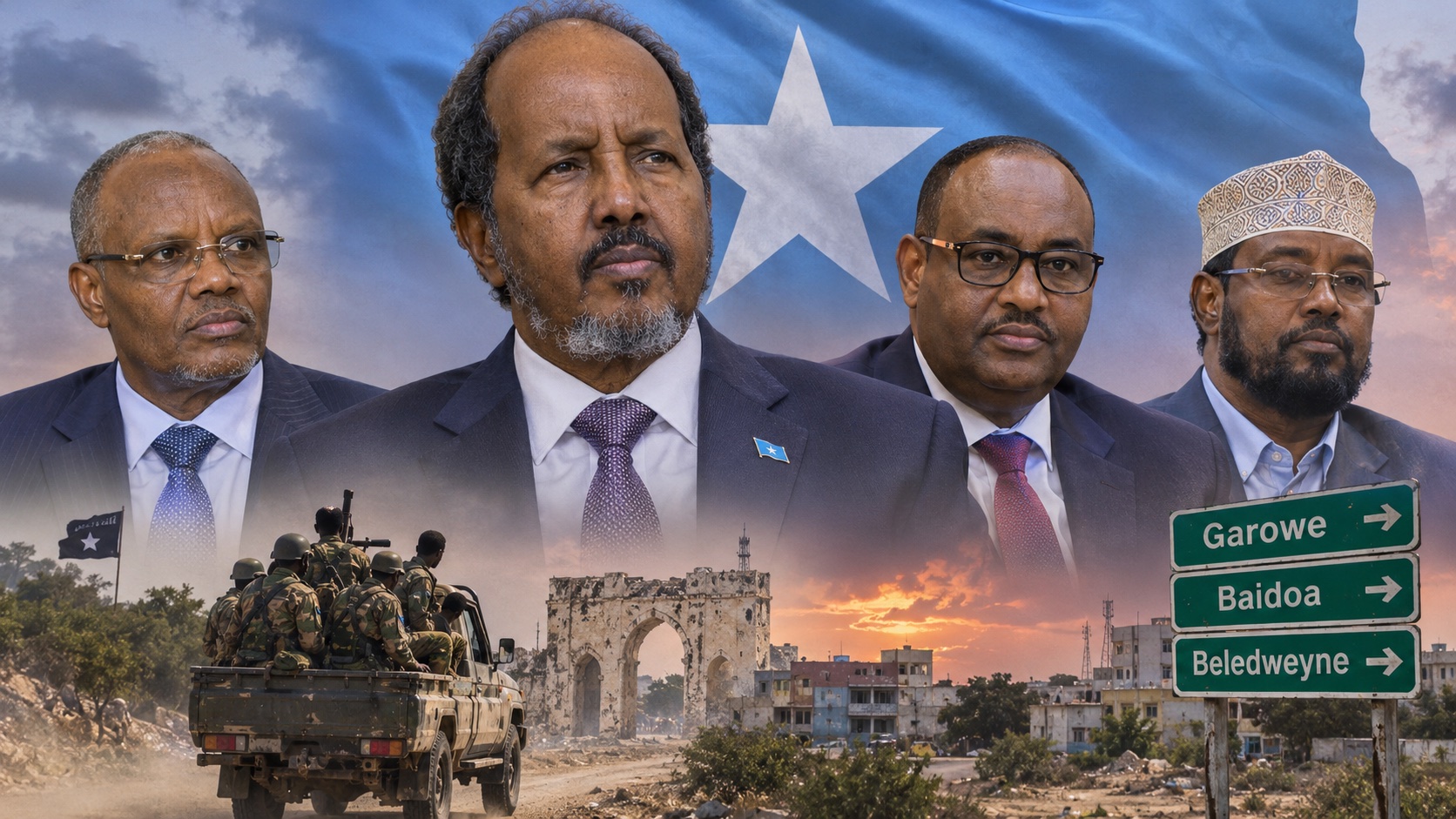

Somalia is facing mounting political instability and security challenges as disputes over presidential authority, federal elections and regional governance threaten to deepen divisions between the federal government and influential political leaders.
According to the November 16 edition of Somali Report's The Insider, escalating tensions in South West State and Hirshabelle, combined with disagreements over the legitimacy of constitutional changes and judicial decisions, have created fresh uncertainty over the country's political future.
Armed Confrontations Raise Fears of Wider Instability
In South West State, forces loyal to former regional president Abdiaziz Hassan Mohamed, widely known as Laftagareen, reportedly attacked a federal military base in Golweyn, near Marka, on Sunday.
Local media reports suggested that the forces subsequently captured the town, although independent confirmation of territorial control remains unavailable.
Laftagareen, who has reportedly been based in Nairobi since leaving office in March, is said to have consolidated control over several districts in Bay region.
According to the briefing, his forces now control four of the region's five districts, leaving Baidoa outside their control.
The federal government has accused fighters associated with Laftagareen of maintaining links with al-Shabaab, allegations his supporters deny.
The growing confrontation raises concerns about the possibility of further armed clashes between federal forces and regional political factions.
Hirshabelle Dispute Fuels Clan Mobilisation
Political tensions are also intensifying in central Somalia, particularly in Hiiraan, where disagreements over political representation and the leadership of Hirshabelle have contributed to local mobilisation.
Former intelligence chief Abdullahi Mohamed Ali, commonly known as Sanbaloolshe, is reportedly involved in mobilising local forces amid growing dissatisfaction with the federal government's approach to regional elections.
Traditional leaders from the Xawaadle community have expressed opposition to the political arrangements, while members of the Makane community have publicly displayed armed fighters in Beledweyne.
The developments have raised fears that political disputes could evolve into broader clan-based confrontations.
Security concerns have been compounded by reports that al-Shabaab has exploited local divisions and captured a village near Matabaan.
Supreme Court Dispute Deepens Constitutional Crisis
A separate confrontation involving Somalia's judiciary has further complicated the country's political situation.
The federal government has challenged a reported Supreme Court ruling that invalidated President Hassan Sheikh Mohamud's one-year term extension and called for federal elections within 90 days.
The controversy follows the removal of Chief Justice Bashe Yusuf Ahmed on November 4.
The Ministry of Justice maintains that the dismissal was lawful under transitional judicial arrangements and disputes the legal validity of subsequent court pronouncements.
United Nations human rights experts have reportedly criticised the dismissal, warning that interference with judicial independence could undermine constitutional governance and the rule of law.
The disagreement has intensified uncertainty over the legal framework governing Somalia's political transition.
Opposition Leaders Seek Common Position in Garowe
Attention is now turning to Garowe, where Puntland President Said Abdullahi Deni and Jubaland leader Ahmed Mohamed Islam, known as Ahmed Madobe, are expected to hold consultations on the national political crisis.
Their anticipated meeting follows the failure of the November 14 political dialogue proposed by President Hassan Sheikh Mohamud, which opposition leaders declined to attend.
The opposition has called for an inclusive electoral agreement and international mediation involving partners including the United States, United Kingdom, European Union and Türkiye.
However, divisions remain over constitutional amendments, regional autonomy, electoral administration and the political legitimacy of competing institutions.
The Garowe discussions could become a significant test of whether opposition leaders can establish a unified negotiating position.
President Warns of External Threats to Somalia's Sovereignty
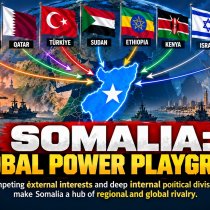
Meanwhile, President Hassan Sheikh Mohamud has reportedly identified Israel and Taiwan as threats to Somalia's sovereignty and territorial integrity.
Speaking at a ceremony marking the construction of a China-backed National Defence University in Mogadishu, the president reaffirmed Somalia's commitment to the principles of "One China" and "One Somalia."
His remarks reflect growing geopolitical tensions surrounding Somaliland's international relationships and the broader strategic competition in the Horn of Africa.
The president also urged opposition leaders to resume dialogue, stressing that national unity, security and sovereignty should remain fundamental priorities.
Security Transition Adds to Uncertainty
Somalia's political challenges coincide with concerns over the planned withdrawal of Ugandan troops supporting security operations.
The absence of a confirmed replacement arrangement has raised questions about the ability of Somali security institutions to maintain stability while confronting al-Shabaab and managing internal political tensions.
Security analysts have long warned that political fragmentation can weaken counterterrorism coordination and create opportunities for armed groups to expand their influence.
A Critical Test for Somalia's Political Leadership
The simultaneous emergence of regional military confrontations, constitutional disagreements and electoral uncertainty presents a significant challenge for Somalia's federal institutions.
The country's political future may increasingly depend on whether federal and regional leaders can reach an agreement on electoral procedures, constitutional authority and the distribution of political power.
Without meaningful negotiations, Somalia risks entering a prolonged period of institutional confrontation at a time when security threats remain substantial.
The anticipated Garowe consultations and any renewed dialogue with Villa Somalia will therefore be closely watched as indicators of whether the country's political leaders are prepared to pursue compromise.
For Somalia, the central question is no longer simply who will govern, but whether its competing political institutions can agree on a legitimate and peaceful process for determining the country's next leadership.
Source: Somali Report, The Insider, Issue No. 01, November 16, 2026.
Editorial note: This article is based on the supplied Somali Report briefing. Claims concerning territorial control, judicial rulings, political statements and military developments have been attributed where appropriate and have not been independently verified for this article.








Somalia Faces Deepening Political and Security Crisis as Election Disputes Fuel Regional Tensions
Somalia is facing mounting political instability and security challenges as disputes over presidential authority, federal elections and regional governance threaten to deepen divisions between the federal government and influential political leaders.