ALSO IN THE NEWS

Somalia Emerging as an Arena of Regional and Global Power Competition
 0
0
Friday October 02, 2026 - 19:09:16 in Latest News by Super Admin
- Visits: 67
-

- Share
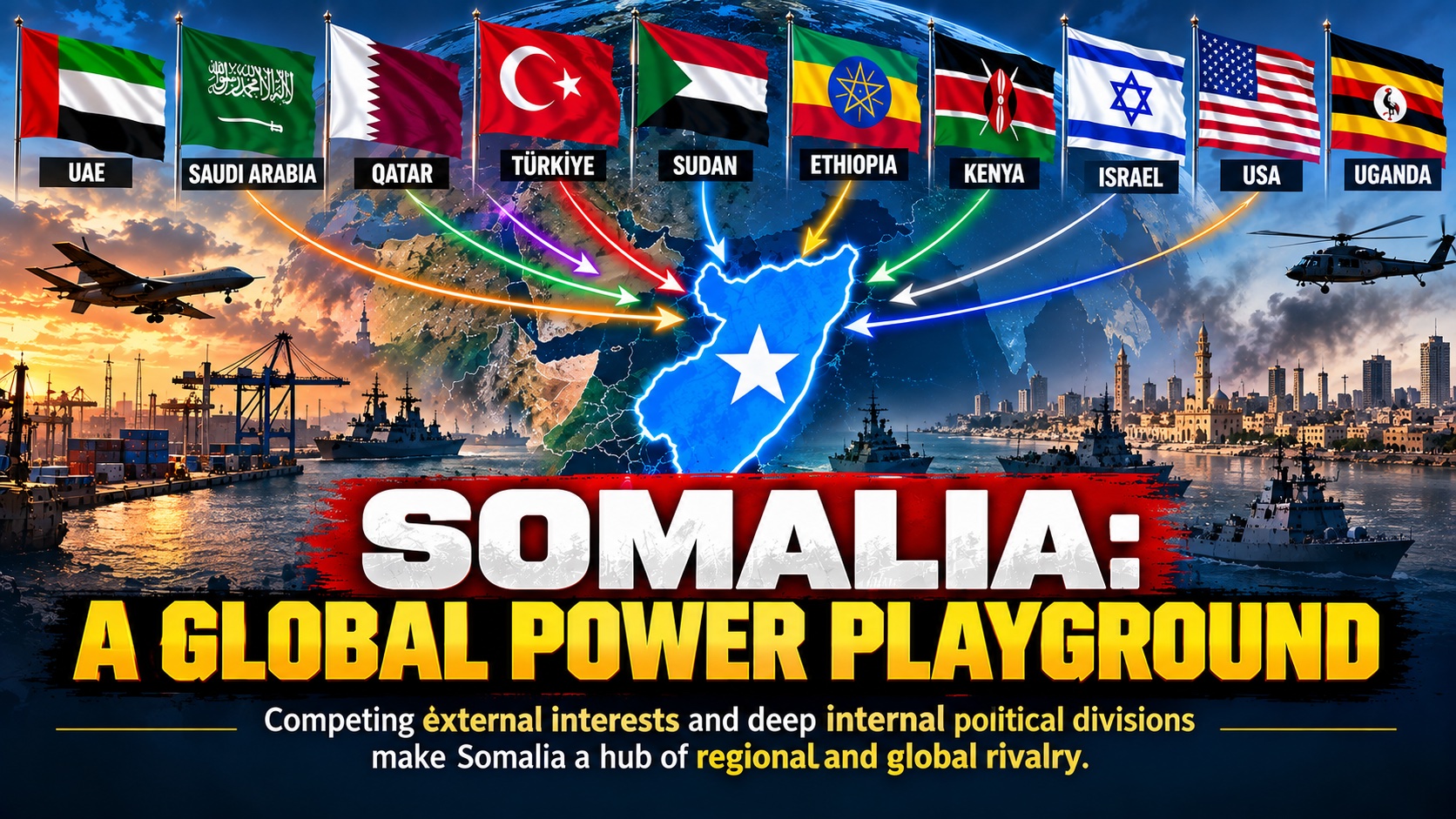

MOGADISHU — Somalia is increasingly finding itself at the intersection of competing regional and international interests, as political divisions at home overlap with a rapidly changing geopolitical contest across the Horn of Africa, Red Sea and Gulf of Aden.
Countries including the United Arab Emirates, Saudi Arabia, Qatar, Türkiye, Sudan, Ethiopia, Kenya, Israel, the United States and Uganda have varying security, diplomatic, economic or strategic interests in Somalia and the wider region. Their objectives are not identical, nor are these countries necessarily operating as opposing blocs.
What makes the situation particularly sensitive is the interaction between these external interests and Somalia’s own political divisions.
Security and Military Competition
Türkiye has established one of the deepest security partnerships with Somalia. A ten-year defence and economic cooperation framework commits Ankara to helping build, train and equip Somalia’s navy, while Türkiye has also expanded its military role in the country.
Uganda and Kenya remain important actors through the African Union Support and Stabilisation Mission in Somalia, or AUSSOM. Uganda hosted a summit of troop-contributing countries in July 2026 involving Somalia, Kenya, Ethiopia, Egypt, Burundi and Djibouti, underscoring the continuing regional dimension of Somalia’s security architecture.
The United States also maintains a significant counterterrorism and security interest in Somalia, particularly regarding Al-Shabaab and the security of the wider Red Sea and Gulf of Aden region.
Gulf States and the Red Sea
The Gulf powers have another set of interests.
The UAE, Saudi Arabia and Qatar have all developed political, economic or security relationships across Somalia and the wider Horn of Africa. The UAE in particular has been associated with port, logistics and security interests across the region, while Saudi Arabia views stability around the Red Sea as strategically important.
These relationships have increasingly become connected to the politics of ports, maritime corridors, trade routes and access to the Red Sea.
Ethiopia, Kenya and Somalia's Federal Politics
Somalia’s immediate neighbours add another layer.
Ethiopia has long-standing security interests in Somalia and a structural interest in securing diversified maritime access. Kenya has security, economic and political interests along its border with Somalia and has maintained forces under successive African Union missions.
European Union Agency for Asylum reporting notes that Ethiopia, Kenya and the UAE have also cooperated with Somaliland, Puntland or Jubaland on security matters.
This creates a particularly delicate environment because Somalia’s federal government and regional political actors do not always share the same external relationships or strategic priorities.
A Wider Horn of Africa Crisis
The situation cannot be understood by looking at Somalia alone.
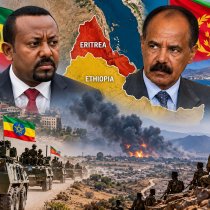
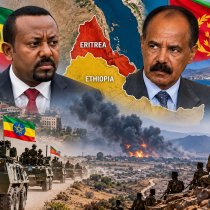
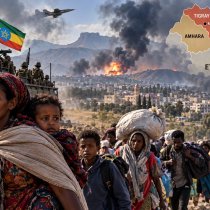
Renewed conflict in northern Ethiopia, tensions involving Ethiopia and Eritrea, the war in Sudan and competition over Red Sea access are increasingly interconnected. Reuters reported on October 2 that shifting alliances involving Ethiopia, Eritrea, Sudan, Egypt, Gulf states and other actors are raising concerns that conflicts in the Horn could increasingly spill across national borders.
At the same time, U.S. officials have raised concerns about growing links between Yemen’s Houthis and Al-Shabaab, potentially connecting Somalia’s security crisis more directly to instability across the Gulf of Aden and the security of international maritime trade.
Somalia at a Strategic Crossroads
Somalia should therefore not simply be described as a battlefield where ten foreign governments are fighting one another. The reality is more complicated.
It is becoming an arena where military partnerships, port investments, counterterrorism operations, maritime security, Red Sea strategy, diplomatic alliances and Somali domestic politics increasingly overlap.
That creates opportunities for Somalia to attract investment, security assistance and diplomatic support. But it also creates a significant risk: if external geopolitical rivalries become closely aligned with competing Somali political factions, domestic disputes could increasingly acquire an international dimension.
The central strategic question is therefore whether Somalia can manage these competing relationships under a coherent national policy — or whether the country’s internal political fragmentation will allow wider regional rivalries to become embedded inside Somali politics.
Somalia is no longer only confronting an internal security crisis. It is increasingly positioned at one of the most contested geopolitical crossroads linking Africa, the Middle East, the Red Sea and the Indian Ocean.












Somalia Emerging as an Arena of Regional and Global Power Competition
MOGADISHU — Somalia is increasingly finding itself at the intersection of competing regional and international interests, as political divisions at home overlap with a rapidly changing geopolitical contest across the Horn of Africa, Red Sea and