ALSO IN THE NEWS

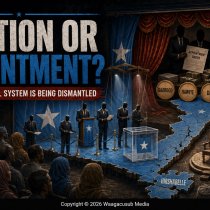
Somalia's Election Theatre: When Appointment Is Presented as Democracy
 0
0
Monday August 10, 2026 - 21:33:13 in Latest News by Super Admin
- Visits: 1179
-

- Share
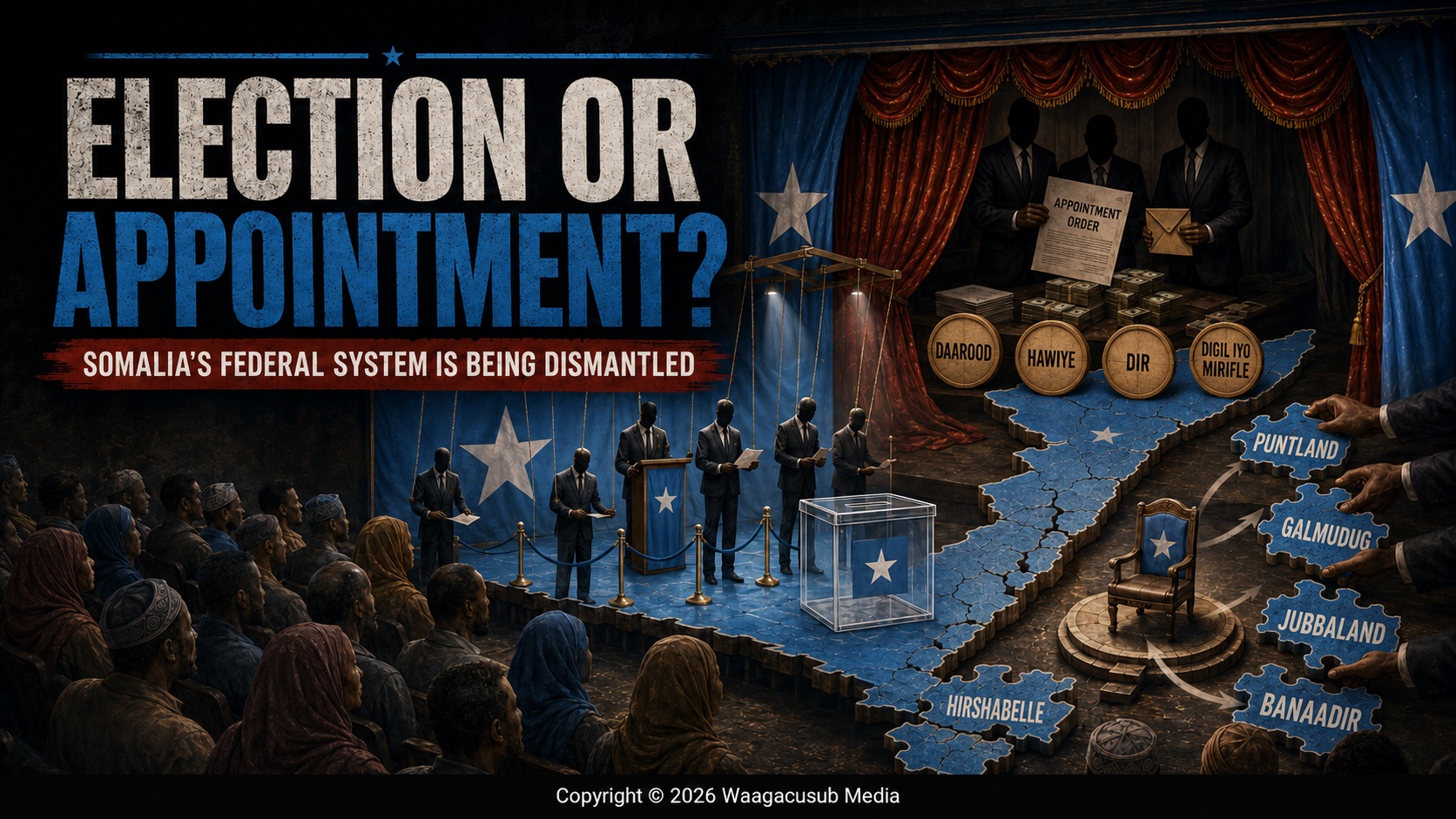

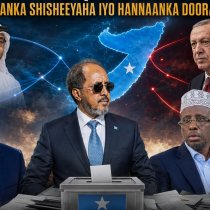
Somalia's political leadership continues to describe the country's emerging political process as a democratic election. However, what is being prepared increasingly resembles a centrally managed appointment system rather than a free, competitive and independently administered national vote.
An election should allow citizens to choose their representatives without intimidation, bribery, political interference or predetermined outcomes. It should also be governed by an independent electoral institution, accepted constitutional rules and an inclusive agreement among Somalia's political stakeholders.
Without these essential safeguards, calling a process an "election” does not make it democratic.
A Performance Designed for the Public
Somali citizens are repeatedly shown political ceremonies, conferences and public declarations presented as evidence of democratic progress. Behind the scenes, however, political positions are often negotiated through private agreements, clan calculations, financial influence and loyalty to powerful individuals.
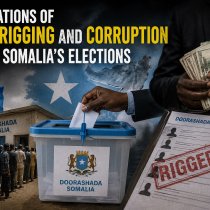
Candidates may appear to compete publicly, while the eventual winners are effectively selected before voting begins. Ballot boxes, delegates and campaign speeches then become part of a political performance intended to provide legitimacy to an appointment already decided elsewhere.
This is not meaningful democratic participation. It is appointment dressed in the language and appearance of an election.
The Decline of Federalism
Somalia adopted federalism to distribute political authority, protect regional representation and prevent the excessive concentration of national power in Mogadishu. Under a functioning federal system, the Federal Government and the Federal Member States should exercise constitutionally defined powers and resolve their disagreements through consultation and lawful institutions.
Today, however, that balance is under increasing pressure.
Puntland, Galmudug, Jubbaland, Hirshabelle and Banaadir must not be treated merely as pieces to be moved or removed according to the political interests of the central leadership. Their populations are entitled to meaningful representation in decisions affecting Somalia’s constitutional and political future.
When the federal authorities attempt to determine the national political process without a credible agreement involving the regions, federalism becomes an empty title. The country may continue to call itself a federal republic, but its institutions increasingly begin to resemble a centralised system controlled by a limited political circle.
Clan Representation Is Not Democracy
Somalia’s political system also remains trapped within clan-based power-sharing. Daarood, Hawiye, Dir, and Digil iyo Mirifle continue to be treated as political voting blocs rather than communities whose individual members possess equal citizenship rights.
Clan representation was introduced as a temporary mechanism during a period of political transition. It was never intended to replace democracy permanently.
Instead of moving Somalia towards equal citizenship and direct public participation, political leaders have continued using clan identity to negotiate positions, distribute state offices and protect their own power. This has encouraged corruption, deepened division and prevented the development of accountable national institutions.
The result is a system in which political candidates frequently seek the approval of clan brokers and powerful officials before seeking the confidence of ordinary citizens.
Bribery and Political Loyalty
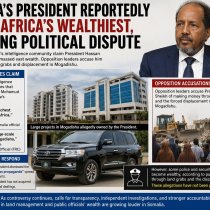
The commercialisation of political office is another serious threat. Parliamentary seats, ministerial positions and other public offices should never be treated as commodities available to the highest bidder.
Where money determines access to political power, public service becomes an investment that officeholders expect to recover through corruption. Leaders selected through bribery are unlikely to remain accountable to citizens; they become accountable to the individuals and networks that financed or appointed them.
This cycle damages public institutions, weakens the rule of law and turns national politics into a marketplace for private interests.
Failure Presented as Progress
One of Somalia’s most damaging political habits is the celebration of symbolic achievements while avoiding honest discussion of institutional failure.
A political agreement reached without meaningful national consensus is presented as a historic victory. An appointment process is announced as an election. The weakening of federal institutions is described as national unity. The concentration of power is promoted as political stability.
Somalia cannot build a credible state by renaming its failures.
The country needs an honest national conversation about its constitutional future, electoral system and federal structure. Political leaders must stop using democratic terminology to legitimise processes that exclude citizens and predetermine political outcomes.
The Way Forward
A credible Somali election requires an agreed constitutional and legal framework, an independent electoral commission, transparent voter registration, political freedoms, effective security arrangements and genuine participation by the Federal Member States and the people of Banaadir.
Most importantly, the outcome must be determined by voters—not by political appointments, clan negotiations, bribery or decisions made behind closed doors.
Somalia has already endured decades of transitional arrangements and indirect political settlements. Its people deserve institutions that reflect their will and leaders who obtain authority through a legitimate and transparent process.
An appointment cannot become an election simply because politicians give it that name. Democracy is measured by the freedom of the voter, the independence of the process and the credibility of the outcome.
Until those standards are met, Somalia’s promised election will remain political theatre.
Copyright © 2026 Waagacusub Media





Somalia's Election Theatre: When Appointment Is Presented as Democracy
Somalia's political leadership continues to describe the country's emerging political process as a democratic election. However, what is being prepared increasingly resembles a centrally managed appointment system rather than a free, compet