ALSO IN THE NEWS

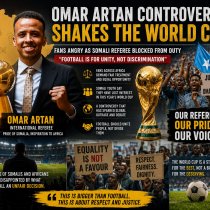
Somalia:World Cup Faces Growing Backlash Following Omar Artan Controversy
 0
0
Thursday June 11, 2026 - 18:03:26 in Latest News by Super Admin
- Visits: 2401
-

- Share
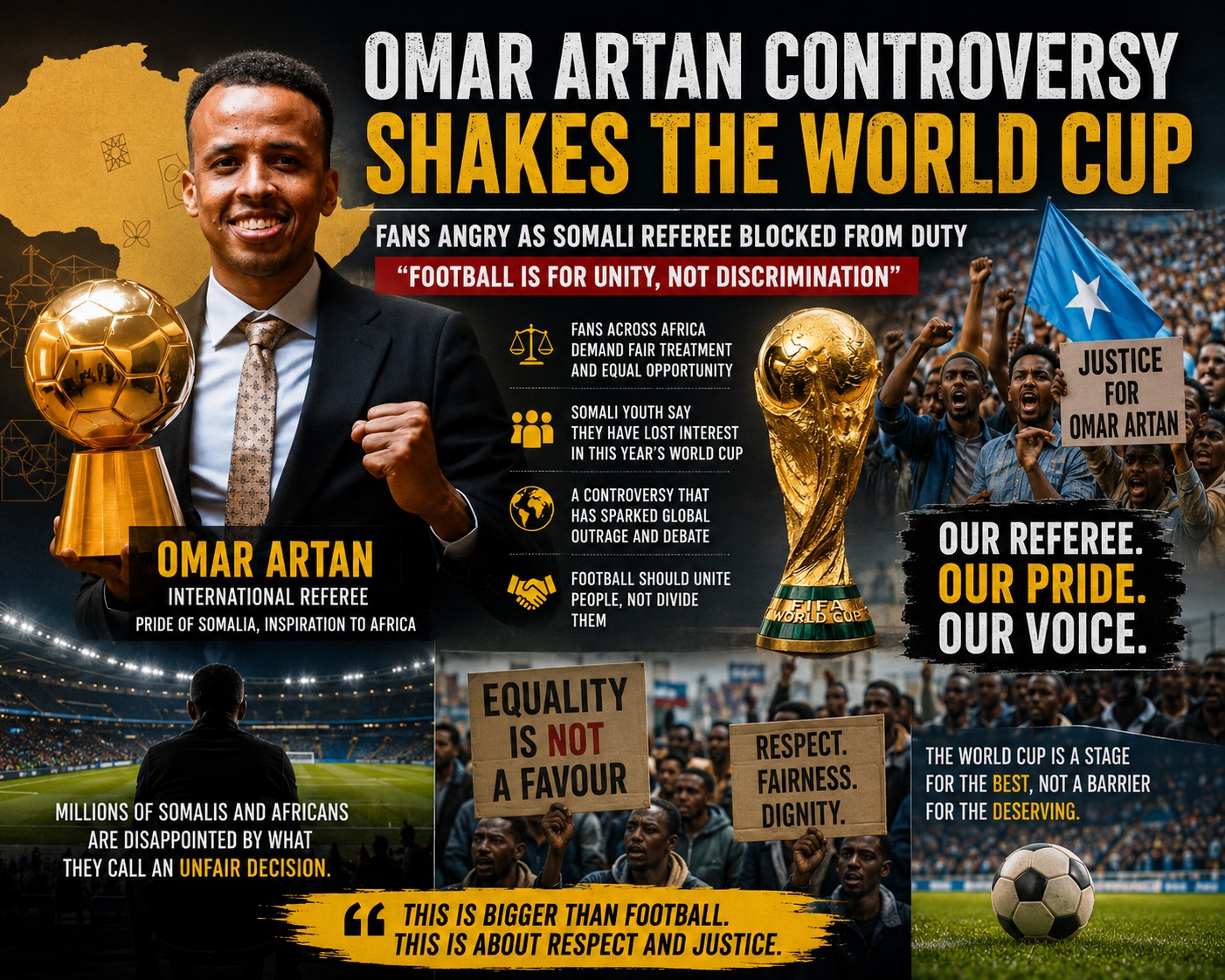

The FIFA World Cup has long been celebrated as a global festival of sport, unity, and cultural exchange. Every four years, billions of people come together to watch the world's greatest football tournament, setting aside political, racial, and national differences in the spirit of competition and fair play.
Waagacusub Media
However, this year's tournament is facing growing criticism and disappointment from football fans across Somalia, Africa, and beyond following the controversy surrounding Somali international referee Omar Artan.
For many young Somalis, the excitement traditionally associated with the World Cup has been overshadowed by frustration and anger. Social media platforms have been flooded with reactions from football supporters expressing disappointment over the circumstances that prevented Omar Artan from performing his duties at the tournament.
A Symbol Beyond Football
Omar Artan is not merely a referee.
He represents a generation of African professionals who have worked tirelessly to earn recognition on the international stage. His rise from Somalia to the highest levels of world football inspired millions of young people across Africa and the Somali diaspora.
Many supporters viewed his participation in the World Cup as a historic achievement not only for Somalia but for African football as a whole.
As a result, the controversy surrounding his exclusion quickly became larger than football itself.
Questions About Fairness and Equal Opportunity
Across Africa, many football fans have raised questions about fairness, equal opportunity, and the principles that international sport claims to represent.
Supporters argue that football is designed to unite people from different backgrounds and cultures. They believe that the integrity of global sporting events depends on ensuring that participants are treated fairly regardless of nationality, ethnicity, or country of origin.
The debate has sparked conversations far beyond the football community, with politicians, journalists, human rights advocates, and sports personalities discussing the broader implications of the case.
The Impact on World Cup Enthusiasm
In Somalia, reactions have been particularly strong.
Many football fans who would normally be preparing to celebrate the World Cup say they are struggling to feel the same enthusiasm this year. While millions will undoubtedly continue watching the tournament, the controversy has clearly affected public sentiment among many supporters.
For some, the issue has become a test of whether international sport can truly remain independent from politics and discrimination.
Danger of Exploitation by Extremist Narratives
Analysts have also warned that extremist organizations and propaganda networks often attempt to exploit controversial international events in order to spread anti-Western narratives and recruit supporters.
While such groups do not represent the views of ordinary Somalis, experts caution that perceived injustices can sometimes be manipulated by extremists seeking to advance their own agendas.
This makes transparency, fairness, and accountability even more important in cases that attract significant international attention.
A Story That Captured Global Attention
Regardless of differing political opinions, one fact is undeniable:
Omar Artan's story has resonated across the world.
What began as a football-related controversy has evolved into a broader discussion about fairness, opportunity, inclusion, and the values that international sport is meant to uphold.
For many supporters, Omar Artan has become more than a referee. He has become a symbol of perseverance, dignity, and determination in the face of adversity.
Whether the controversy ultimately changes policies or not, it has already left a lasting mark on public opinion.
And as the World Cup approaches, millions of people continue to ask a simple question:
Can the world's biggest sporting event truly fulfill its mission of bringing people together if deserving participants are left behind?
By Dahir Alasow
Waagacusub Media







Somalia:World Cup Faces Growing Backlash Following Omar Artan Controversy
The FIFA World Cup has long been celebrated as a global festival of sport, unity, and cultural exchange. Every four years, billions of people come together to watch the world's greatest football tournament, setting aside political, racial, and n