ALSO IN THE NEWS

Somalia Faces a Dangerous Geopolitical Contest as Rival Alliances Battle for Influence

0
Tuesday July 21, 2026 - 17:25:01 in Latest News by Super Admin
  • Visits: 124
  • (Rating 0.0/5 Stars) Total Votes: 0
  • 0 0
  • Share via Social Media

    Somalia Faces a Dangerous Geopolitical Contest as Rival Alliances Battle for Influence

    MOGADISHU, Somalia — Somalia is facing one of the most dangerous geopolitical and constitutional crises in its recent history, as competing regional and international alliances seek influence over the country's territory, natural resources

    Share on Twitter Share on facebook Share on Digg Share on Stumbleupon Share on Delicious Share on Google Plus

MOGADISHU, Somalia — Somalia is facing one of the most dangerous geopolitical and constitutional crises in its recent history, as competing regional and international alliances seek influence over the country's territory, natural resources and strategic coastline.


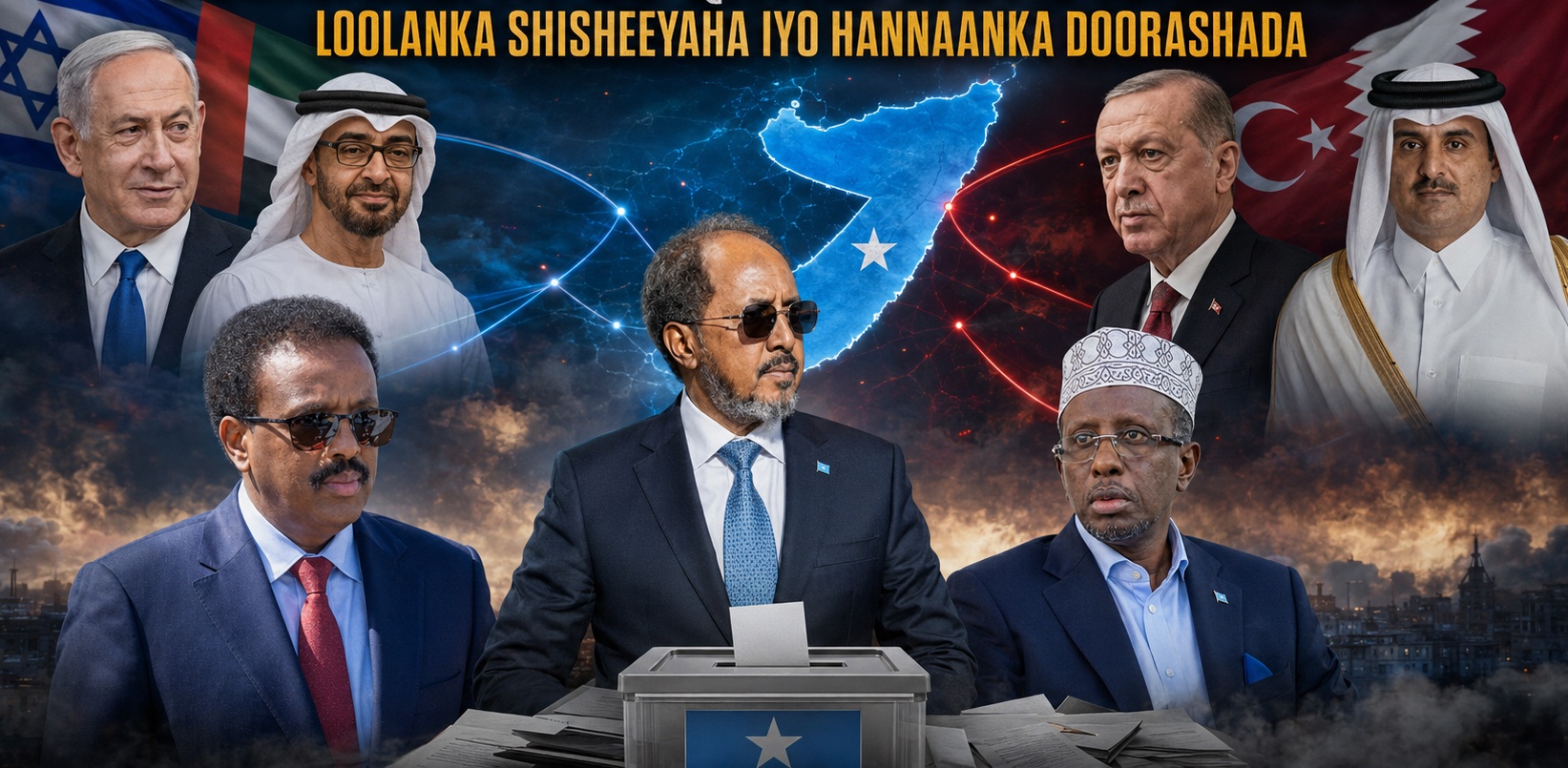
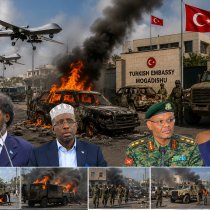
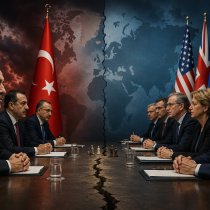
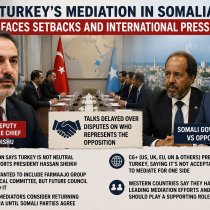
On one side is an emerging alignment involving Israel and the United Arab Emirates, with the United States maintaining significant security interests in the region. On the other is a bloc led by Türkiye and Qatar, with Saudi Arabia increasingly supporting Somalia’s sovereignty and territorial unity.

At the centre of the contest are Somaliland’s international status, Türkiye’s expanding economic and military presence in Somalia, and the deepening confrontation between the Federal Government in Mogadishu and Puntland.

Somaliland becomes a geopolitical battleground

Israel’s recognition of Somaliland in December 2025 fundamentally changed the political landscape of the Horn of Africa. Somalia, Türkiye, the African Union and several Arab and African states condemned the decision as a violation of Somalia’s sovereignty and territorial integrity. The Guardian

Somali officials and political observers accuse the UAE of supporting efforts to secure wider international recognition for Somaliland. Mogadishu believes such a campaign is intended not only to divide Somalia but also to weaken Türkiye’s growing strategic position in the country.

The UAE has maintained substantial commercial and security interests in Somaliland, particularly around the strategic port and airport of Berbera. Recent reporting has also alleged that the UAE is developing military infrastructure in Berbera that could serve Emirati, Israeli and American security interests near the Red Sea and Yemen. Le Monde

There are additional, unverified allegations that Emirati operations have received intelligence assistance from elements within Ethiopia and Kenya. Neither the UAE nor the governments of Ethiopia and Kenya have publicly confirmed such cooperation in relation to Somaliland’s recognition.

Türkiye’s rapidly expanding influence

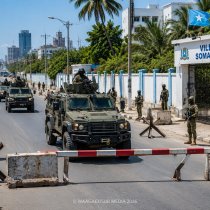
Türkiye has become one of Somalia’s most powerful international partners. Ankara trains Somali security forces, operates its largest overseas military facility in Mogadishu and has signed agreements covering defence, offshore energy exploration and marine resources.

Turkish companies and state institutions have secured an increasingly prominent role in Somalia’s major economic sectors. Agreements signed between the two governments include offshore oil and gas exploration, maritime security cooperation and fisheries management.

A joint Somali-Turkish company, SOMTURK, has also been established to regulate fishing licences and oversee activity within Somalia’s maritime territory. Turkish Minute

Supporters argue that Türkiye is helping Somalia rebuild institutions, protect its coastline and develop resources that have remained largely inaccessible for decades. Critics, however, warn that Mogadishu may be granting a foreign partner excessive control over strategic national assets without sufficient parliamentary and public scrutiny.

The struggle over Somaliland can therefore no longer be viewed as a purely domestic dispute. It has become part of a wider competition over ports, military bases, energy reserves, fisheries and shipping routes connecting the Indian Ocean, the Gulf of Aden and the Red Sea.

Mogadishu–Puntland tensions reach a dangerous stage

The geopolitical struggle is unfolding alongside a serious internal confrontation between Somalia’s Federal Government and Puntland.

Relations deteriorated further after Mogadishu appointed a new commander for the Somali National Army’s 54th Division, based in Garowe. Puntland rejected the appointment and introduced restrictions on federal officials and federal-aligned security forces operating inside the region. Critical Threats Project

Forces loyal to the Federal Government and those supporting Puntland President Said Abdullahi Deni have reportedly faced one another in an increasingly tense military environment.

Puntland authorities accuse President Hassan Sheikh Mohamud’s government of attempting to destabilise the regional administration and weaken its autonomous political and security structures. Federal officials, however, argue that Mogadishu has constitutional authority over national defence and must be able to organise federal forces throughout the country.

Claims that the Federal Government intends to "destroy Puntland” remain political allegations and have not been independently established. Nevertheless, troop movements, competing command structures and inflammatory statements from both sides have created a genuine risk of armed confrontation.

North-Eastern State challenges Somaliland and Puntland

The Federal Government’s backing of the newly established North-Eastern State administration has added another layer to the crisis.

Mogadishu presents the administration as representing communities in areas contested by Somaliland and Puntland. Its creation weakens Somaliland’s claim to all the territory of the former British Somaliland protectorate, particularly in the Sool, Sanaag and Cayn areas.

However, Puntland views the new administration as an attempt by Mogadishu to remove territory from Puntland while building a federal-aligned political and military structure along its western frontier.

The Federal Government may therefore be pursuing two objectives simultaneously: challenging Somaliland’s territorial claims and reducing Puntland’s political influence. This strategy carries major risks because it could provoke overlapping conflicts involving Mogadishu, Puntland, Somaliland and locally organised forces.

Somalia caught between rival alliances

The emerging struggle may be broadly understood through two competing alignments:

Alignment Principal interests
Israel–UAE, with wider US security interests Somaliland, Berbera, Red Sea security, access to military infrastructure and limiting rival influence
Türkiye–Qatar, with Saudi support for Somali unity Federal sovereignty, defence cooperation, energy, fisheries and preservation of Somalia’s recognised borders

These alignments are not formal military alliances, and the positions of Washington and Riyadh remain more complicated than a simple division into two camps. Nevertheless, their competing interests are increasingly visible.

Saudi Arabia and Türkiye have opposed actions undermining Somalia’s territorial integrity, while Qatar remains a close political and security partner of the Federal Government. Türkiye has publicly condemned Israel’s recognition of Somaliland as illegal and destabilising. Reuters

A country at a critical crossroads

Somalia is no longer dealing with a single political dispute. It is simultaneously confronting an international contest over the Red Sea, competition for natural resources, Somaliland’s recognition campaign and a potential armed conflict between federal and regional forces.

If these crises are managed through military pressure and foreign intervention, Somalia risks becoming a battlefield for rival international powers. Conflict between Mogadishu and Puntland would also divert personnel and resources away from the continuing threat posed by Al-Shabaab and Islamic State militants.

Somali leaders must urgently establish a nationally accepted framework governing federal relations, territorial disputes and agreements involving strategic resources. Foreign partnerships should be transparent and subject to constitutional and parliamentary oversight.

Without meaningful dialogue between Mogadishu, Puntland, Somaliland and the North-Eastern State administration, the international contest for influence could accelerate Somalia’s fragmentation rather than strengthen its sovereignty.

Somalia is entering a decisive period: the choices made now may determine whether the country protects its unity and resources—or becomes the arena of a wider geopolitical confrontation.

BY Dahir Alasow

Investigative Journalist


Leave a comment

  Tip

  Tip

  Tip

  Tip

  Tip


Latest News

Copyright © 2009 - 2026 Sunatimes News Agency All Rights Reserved.
Home | About Us | Diinta | Reports | Latest News | Featured Items | Articles | Suna Radio | Suna TV | Contact Us