ALSO IN THE NEWS

Somalia: US, EU, UN and Western Allies Increase Pressure on Somali Leaders as Political Crisis Deepens
 0
0
Monday June 01, 2026 - 18:40:40 in Latest News by Super Admin
- Visits: 1860
-

- Share

 File Attachment
Size: 17 KB
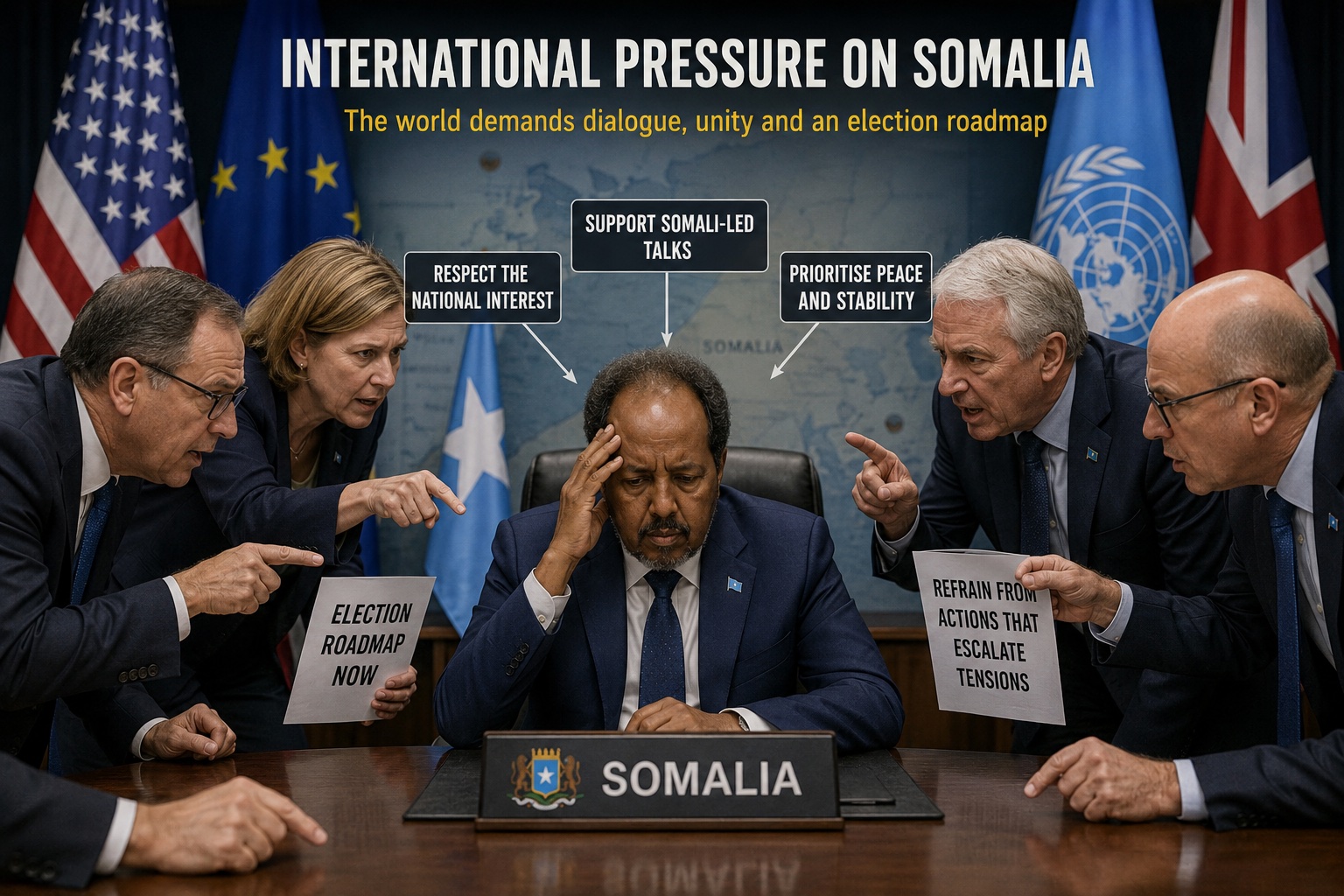
MOGADISHU, Somalia — June 1, 2026 — The international community has intensified diplomatic pressure on Somalia's political leaders, warning that the country's growing political tensions could threaten stability and undermine progress achieved in recent years.
In a rare and coordinated move, the United States, the European Union, the United Nations, the United Kingdom, and several Western governments issued statements calling for urgent dialogue and political consensus to prevent further escalation of the crisis.
Investigative Journalist | Founder of Waagacusub Media
International Partners Demand Immediate Dialogue
A joint statement signed by major international partners expressed concern over the current political situation in Somalia and urged all stakeholders to return to negotiations without delay.
The statement called on Somali leaders to swiftly reach consensus on an electoral roadmap and emphasized that the international community remains ready to support Somali-led talks aimed at resolving the dispute.
"We call on all sides to resume dialogue as soon as possible and to swiftly reach consensus on an election roadmap in the interest of the Somali people," the statement said.
The signatories also urged political leaders to prioritize national interests and avoid actions that could increase tensions or create instability.
United States Issues Separate Warning
The United States Embassy in Mogadishu reinforced the message in a separate statement, urging all parties to exercise restraint and refrain from actions that could fuel violence.
Washington emphasized the importance of dialogue, cooperation, and peaceful engagement as Somalia navigates one of its most sensitive political periods in recent years.
"The United States urges all stakeholders to exercise restraint and avoid actions that fuel violence or instability," the embassy stated.
Growing International Concern
The coordinated statements reflect growing concern among Somalia's international partners regarding the deepening political divisions surrounding the country's electoral process and broader governance issues.
Diplomatic observers say the unusually unified response from Western governments and international organizations demonstrates increasing anxiety that political disagreements could divert attention from key national priorities, including security operations against Al-Shabaab, economic recovery, and state-building efforts.
Calls for National Unity
International partners stressed that the responsibility for resolving the crisis ultimately rests with Somali leaders and institutions. They urged all political actors to place the interests of the Somali people above political rivalries and work toward a peaceful and inclusive settlement.
The latest diplomatic intervention is widely viewed as one of the strongest international messages directed at Somalia's political leadership in recent months, highlighting the urgency of reaching a negotiated solution before tensions escalate further.
As political uncertainty continues, the international community has made clear that dialogue, compromise, and national unity remain essential for safeguarding Somalia's stability and democratic future.
By Dahir Alasow
Investigative Journalist | Founder of Waagacusub Media
Dahir Alasow is a Somali-Dutch investigative journalist, media executive, and human rights advocate with more than 25 years of experience covering political affairs, corruption, terrorism, security, human rights, and governance issues across Somalia and the Horn of Africa.
He is the Founder and Editor-in-Chief of Waagacusub Media, an independent news organization specializing in investigative reporting and political analysis. Throughout his career, Alasow has conducted high-profile investigations involving government accountability, security institutions, organized crime networks, piracy, and extremist groups.
Based in Breda, the Netherlands, he continues to report on Somali, African, and international affairs, providing in-depth analysis and exclusive investigations for global audiences.
Contact: info@waagacusub.net
Location: Breda, The Netherlands







Somalia: US, EU, UN and Western Allies Increase Pressure on Somali Leaders as Political Crisis Deepens
MOGADISHU, Somalia — June 1, 2026 — The international community has intensified diplomatic pressure on Somalia's political leaders, warning that the country's growing political tensions could threaten stability and undermine pro