ALSO IN THE NEWS

Abiy Ahmed Begins New Term as Ethiopia's Prime Minister as Country Faces Escalating Multi-Front War
 0
0
Monday October 05, 2026 - 18:08:19 in Latest News by Super Admin
- Visits: 1770
-

- Share


Ahmed Shide elected Speaker of Parliament as Ethiopia enters a new political term amid renewed warfare in Tigray, Amhara and Afar and mounting regional tensions
ADDIS ABABA, Ethiopia — October 5, 2026 — Abiy Ahmed has formally begun another five-year term as Prime Minister of Ethiopia, taking the oath of office as the country enters a new political cycle at one of the most dangerous moments in its recent history.
Ethiopia's House of Peoples' Representatives appointed Abiy during the opening of the seventh parliamentary term on Monday, formally establishing a new federal administration following national elections.
At the same session, Ahmed Shide, a senior Ethiopian-Somali politician and former finance minister, was elected Speaker of the House of Peoples' Representatives.
His elevation places one of Ethiopia’s most prominent Somali political figures at the head of the country's lower chamber at a time when parliament is likely to confront major questions involving national security, federal authority, economic stability and the widening armed conflict.
The political ceremony in Addis Ababa, however, unfolded against a dramatically different reality across northern Ethiopia.
A New Government in the Middle of a New War
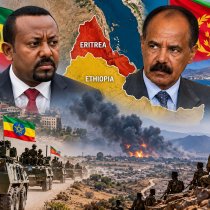
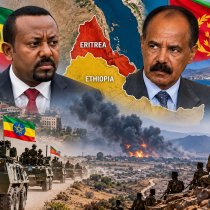
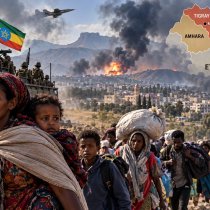
Renewed warfare has transformed Ethiopia's northern crisis into a dangerous multi-front conflict.
Fighting has spread across Tigray, Amhara and Afar, threatening what remained of the fragile political settlement established after the devastating 2020–2022 Tigray war.
Military operations have intensified across several fronts, airports have become strategic objectives, commercial aviation has been disrupted and telecommunications have been severely affected across parts of northern Ethiopia.
The latest confrontation is also significantly more complicated than a simple conflict between the federal government and Tigrayan forces.
Armed opposition movements from different parts of Ethiopia have moved toward broader cooperation against Abiy's government, creating the possibility of a prolonged conflict involving several regions and competing political agendas.
The emergence of such alliances presents a potentially serious challenge to federal authority.
Mekelle Again at the Centre of the Conflict
Tigray's regional capital, Mekelle, has once again become one of the most strategically important locations in the war.
Tigrayan forces entered the city during their latest offensive before subsequently withdrawing. Ethiopian federal forces and allied fighters then moved back into Mekelle and regained control of key locations.
The rapid changes in territorial control demonstrate both the intensity and unpredictability of the current conflict.
Fighting has nevertheless continued elsewhere in Tigray, with airstrikes and artillery attacks reported as military operations expand beyond the regional capital.
For civilians, the return of warfare has revived memories of the catastrophic 2020–2022 conflict, which killed hundreds of thousands of people, displaced millions and devastated communities across northern Ethiopia.
The danger today may be even broader.
Ethiopia's internal conflict is increasingly intersecting with unresolved regional rivalries across the Horn of Africa.
Ethiopia’s Crisis Risks Becoming Regional
Relations between Ethiopia and Eritrea have deteriorated sharply.
Addis Ababa has accused Eritrea of supporting forces fighting the Ethiopian federal government, allegations rejected by Asmara.
The deterioration has escalated into a major diplomatic rupture, adding another dangerous dimension to an already volatile military confrontation.
Ethiopian officials have also alleged foreign involvement by other regional governments. Those accusations have been disputed, but they illustrate the growing international dimension surrounding Ethiopia's internal conflict.
The strategic environment is particularly dangerous.
The Horn of Africa is already affected by the continuing war in Sudan, instability around the Red Sea, tensions surrounding Nile waters and competing regional and international geopolitical interests.
A prolonged Ethiopian war could therefore have consequences far beyond the country's borders.
The fighting in Afar is particularly significant because of Ethiopia's dependence on the trade corridor connecting Addis Ababa to Djibouti.
As a landlocked country, Ethiopia relies heavily on this route for imports and exports.
Any serious disruption could transform the military crisis into a wider economic emergency.
Ahmed Shide Takes Control of Parliament
Against this backdrop, Ahmed Shide's election as Speaker represents a significant change in Ethiopia's political leadership.
Shide has occupied several senior positions within the federal government and has become one of the country's most influential politicians from Ethiopia's Somali community.
As Speaker, he will preside over the House of Peoples’ Representatives during a period when lawmakers may be required to address extraordinary questions concerning war, national security, regional administration, economic pressures and Ethiopia's increasingly difficult relations with neighbouring states.
Muferihat Kamil was meanwhile elected Speaker of the House of Federation, Ethiopia's upper chamber.
The new parliamentary leadership therefore begins its mandate under circumstances far removed from a normal political transition.
Abiy’s Most Dangerous Political Term
Abiy Ahmed first became prime minister in 2018 after years of political unrest and demands for reform.
His arrival initially generated enormous expectations inside and outside Ethiopia.
Political prisoners were released, opposition movements were allowed greater political space and relations with Eritrea dramatically improved.
The rapprochement with Eritrea contributed to Abiy receiving the Nobel Peace Prize in 2019.
But Ethiopia's political trajectory subsequently changed dramatically.
War erupted in Tigray in November 2020 and developed into one of Africa's deadliest modern conflicts, involving Ethiopian federal forces, Tigrayan forces, Eritrean troops and several other armed actors.
The Pretoria peace agreement of November 2022 ended large-scale fighting between the Ethiopian federal government and the Tigray People's Liberation Front.
But the agreement did not permanently resolve the political, territorial and security disputes underlying the conflict.
Those unresolved tensions have now returned to the battlefield.
A Wider Challenge to Federal Authority
The political challenge facing Abiy today may be more complicated than the one Ethiopia confronted during the previous Tigray war.
The current confrontation involves not only Tigray but a broader network of regional grievances and armed movements.
Several opposition groups have sought to coordinate their struggle against the federal government despite major ideological, territorial and political differences between them.
Whether those movements can maintain meaningful military or political cooperation remains uncertain.
But their emergence creates a fundamental challenge for Addis Ababa: the federal government may increasingly have to confront several conflicts simultaneously rather than one geographically contained rebellion.
That could place enormous pressure on Ethiopia's military, economy and federal institutions.
A Government Inaugurated Under Fire
Abiy therefore begins his new mandate confronting questions that extend far beyond conventional electoral politics.
His government must address the widening war, preserve federal authority, prevent further territorial fragmentation, manage deteriorating relations with neighbouring countries and avoid another humanitarian catastrophe.
The contrast in Ethiopia on Monday was striking.
Inside parliament, Ethiopia inaugurated a new government. Across the north, soldiers were fighting over the future of the same state.
The next phase will determine whether Abiy Ahmed can use his renewed political mandate to restore stability or whether Ethiopia is entering another prolonged period of warfare.
The consequences will not be confined to Addis Ababa, Mekelle or Ethiopia's northern regions.
With tensions stretching from the Ethiopian highlands toward Eritrea, Sudan, Djibouti and the Red Sea, the outcome could reshape the security architecture of the entire Horn of Africa.
For Abiy Ahmed, the new five-year term has therefore begun not simply as another political mandate.
It has begun as a struggle over Ethiopia's unity, regional power and the future of one of Africa's most strategically important states.
By Dahir Alasow


















Abiy Ahmed Begins New Term as Ethiopia's Prime Minister as Country Faces Escalating Multi-Front War
Ahmed Shide elected Speaker of Parliament as Ethiopia enters a new political term amid renewed warfare in Tigray, Amhara and Afar and mounting regional tensions ADDIS ABABA, Ethiopia — October 5, 2026 — Abiy Ahmed has formally begun anot