ALSO IN THE NEWS

Pezeshkian's UN Speech Signals Iran's Ambition to Become a Global Power
 0
0
Thursday September 24, 2026 - 18:14:49 in Latest News by Super Admin
- Visits: 188
-

- Share
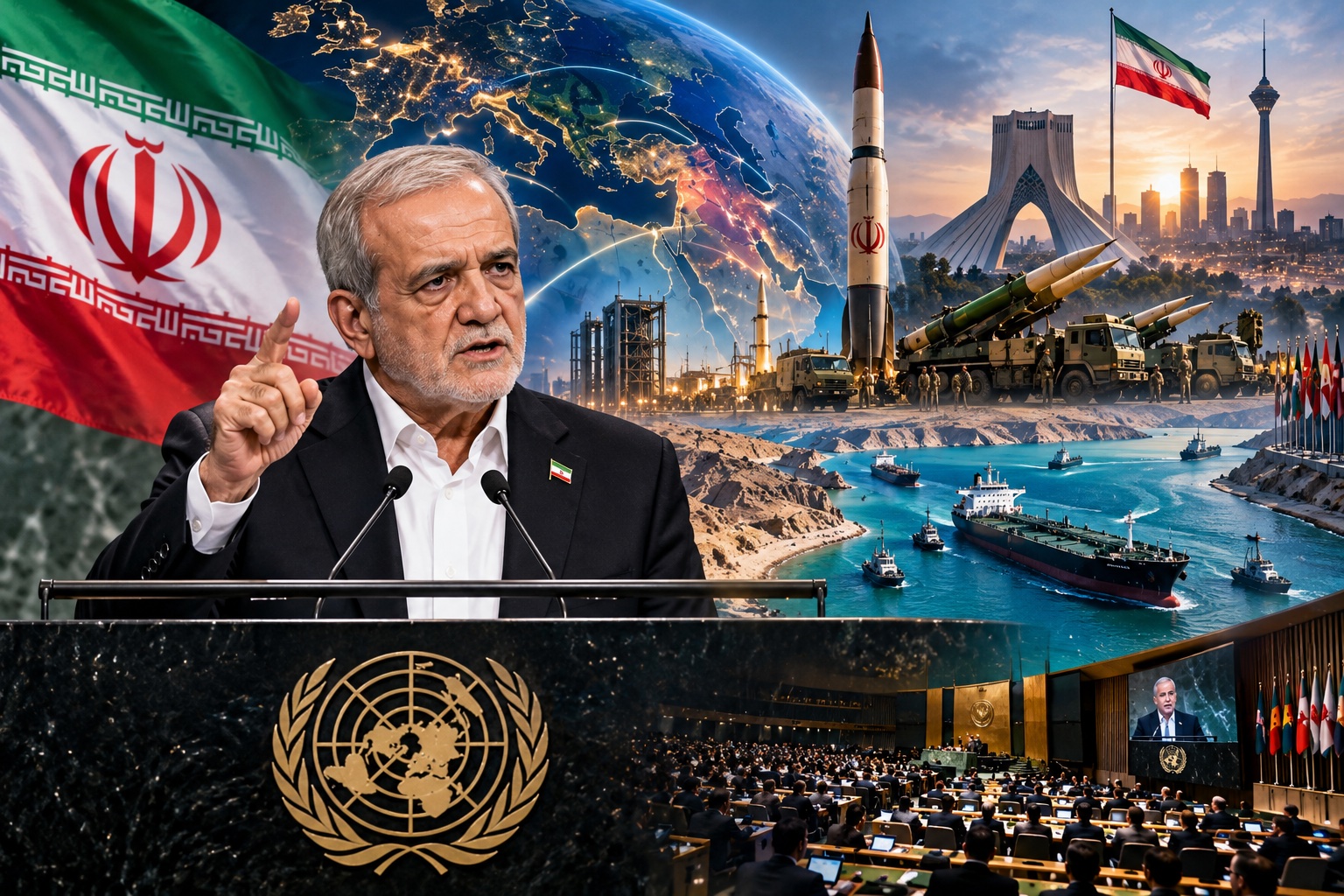

Iranian President Masoud Pezeshkian's defiant address to the United Nations was more than a wartime response to pressure from Washington. It projected a broader message: Iran wants to emerge from the current confrontation not as an isolated state forced into submission, but as an independent power capable of shaping regional security, energy routes and the wider international order.
Waagacusub.net
UNITED NATIONS | September 24, 2026
Pezeshkian did not explicitly declare that Iran seeks "superpower” status. But several themes running through his speech pointed toward Tehran’s determination to strengthen its strategic position and demand recognition as a major power whose interests cannot be ignored.
"We only seek to live independently,” Pezeshkian told the UN General Assembly.
His message combined military defiance, technological independence and diplomatic ambition.
Iran Wants Power Without Permission
Pezeshkian repeatedly rejected the idea that military or economic pressure could force Tehran to surrender.
He argued that Iran requires sufficient military strength to defend itself, while insisting that the country's military capabilities are defensive rather than intended for territorial expansion.
The message was significant.
Iran was effectively presenting national power as the foundation of its sovereignty: military strength to deter attack, technological capability to resist dependence and diplomacy conducted from what Tehran considers a position of equality rather than weakness.
That philosophy was also visible in Pezeshkian's defence of Iran's nuclear programme.
He maintained that Tehran does not seek nuclear weapons but rejected restrictions that would deprive Iran of peaceful nuclear knowledge and technology.
For Tehran, technological independence appears increasingly connected to national power.
Hormuz Demonstrates Iran’s Strategic Reach
Perhaps the clearest demonstration of Iran's international leverage is the Strait of Hormuz.
The strategic waterway has become central to the confrontation because of its importance to global energy markets.
Pezeshkian argued that Iran could not accept a situation in which other countries benefit from the waterway while Tehran itself faces restrictions and military threats.
The significance extends far beyond Iran.
Control, disruption or negotiation over Hormuz gives Tehran influence over an artery through which a substantial share of the world's oil and liquefied natural gas has historically moved.
That gives Iran something few countries possess: the ability to influence calculations not only in Washington and the Middle East, but across global energy markets.
From Regional Power to Global Player?
The broader picture emerging from Pezeshkian's speech is therefore not simply one of Iranian resistance.
It is an attempt to present Iran as a country capable of combining military deterrence, energy leverage, nuclear technology and diplomacy to secure a larger role in international affairs.
Yet there is an important distinction between seeking such influence and becoming a global superpower.
Iran continues to face major economic pressure, sanctions and the consequences of prolonged conflict. Its economic and military resources also differ substantially from those of the world's largest powers.
What the speech demonstrated more clearly was Tehran's ambition to prevent those limitations from allowing other states to dictate its strategic future.
Defiance — But Not Isolation
Perhaps the most revealing part of Pezeshkian's message was that he did not close the door to diplomacy.
Despite rejecting American pressure, he repeatedly said Iran remained prepared for dialogue and negotiations — provided they were not conducted through threats or military coercion.
That combination may define Iran's emerging strategy: demonstrate enough power to resist coercion while retaining diplomacy as a route toward international recognition and negotiated influence.
Pezeshkian's message to the world was therefore broader than "Iran will not surrender.”
It was that Iran intends to remain independent, militarily capable, technologically advanced and strategically influential — and wants other powers to deal with Tehran accordingly.
Whether Iran can convert that ambition into lasting global influence remains uncertain.
But Pezeshkian's UN address made one objective increasingly clear: Tehran does not want merely to survive the confrontation. It wants to emerge from it as a stronger and more consequential power.
By Dahir Alasow
Waagacusub.net
UNITED NATIONS | September 24, 2026
© 2026 Waagacusub.net | All Rights Reserved














Pezeshkian's UN Speech Signals Iran's Ambition to Become a Global Power
Iranian President Masoud Pezeshkian's defiant address to the United Nations was more than a wartime response to pressure from Washington. It projected a broader message: Iran wants to emerge from the current confrontation not as an isolated stat