ALSO IN THE NEWS

Somalia: Mogadishu Mass Evictions Spark International Legal Concerns
 0
0
Friday May 08, 2026 - 16:07:04 in Latest News by Super Admin
- Visits: 2365
-

- Share
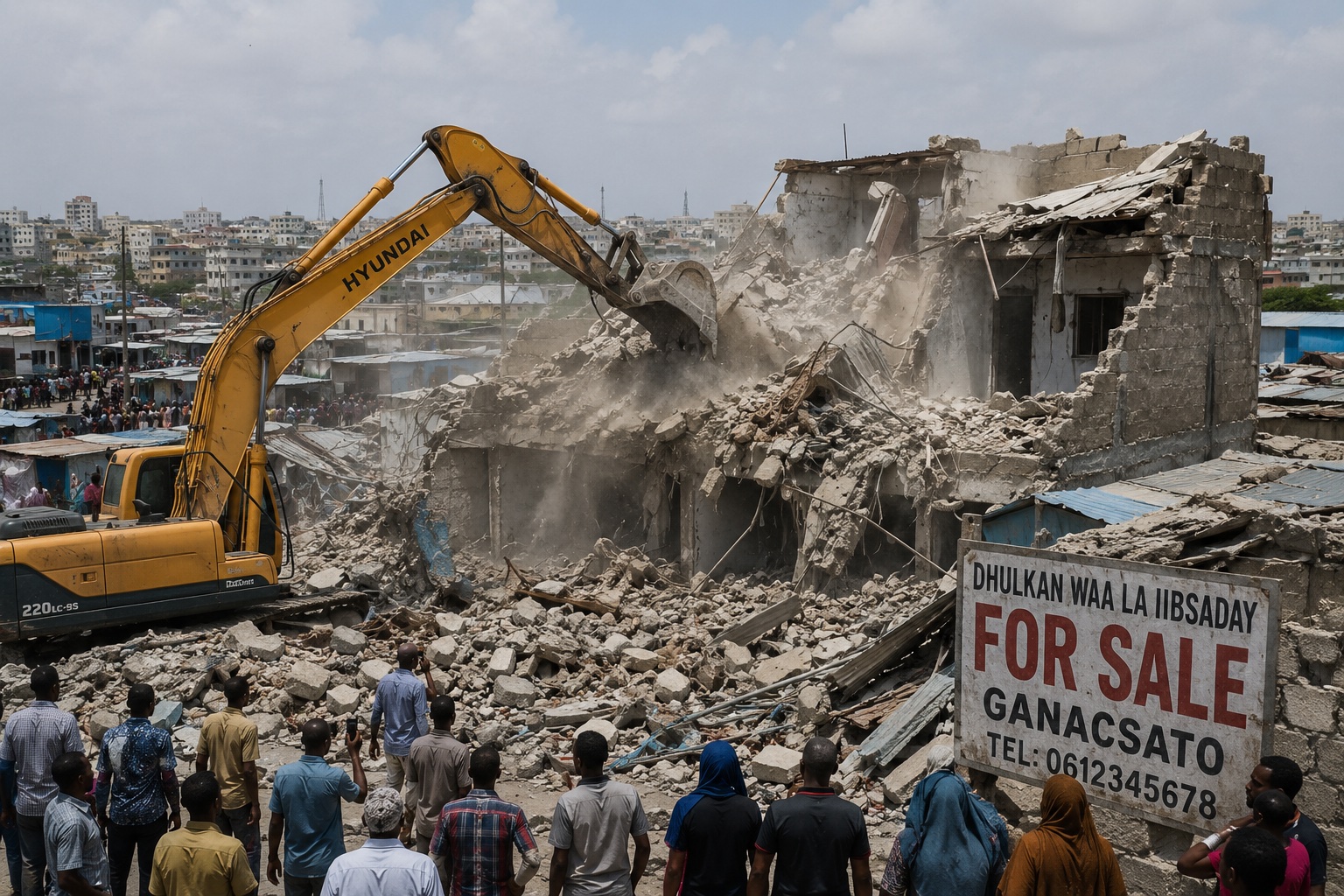

Thousands of vulnerable families in Mogadishu are reportedly facing one of the largest waves of forced displacement in recent Somali history, amid alarming allegations involving demolition of civilian homes, land confiscation, and the transfer of occupied property to private business interests.
According to reports gathered from local residents, humanitarian observers, and civil society sources, approximately 260,000 families have allegedly been displaced from their homes across multiple districts of Mogadishu. Entire neighborhoods are said to have been demolished, leaving women, children, and elderly civilians exposed to severe humanitarian conditions, including heavy seasonal rains, lack of shelter, and limited access to basic services.
Human rights observers warn that, if verified, the reported actions may constitute serious violations of international law, including protections guaranteed under international human rights and humanitarian frameworks.
Legal experts note that forced evictions carried out without lawful judicial procedures, compensation mechanisms, resettlement programs, or humanitarian protections may violate internationally recognized standards, including:
the right to adequate housing;
protections against arbitrary displacement;
civilian property rights;
and principles established under the International Covenant on Economic, Social and Cultural Rights (ICESCR) and the UN Guiding Principles on Internal Displacement.
Concerns have also emerged regarding allegations that some of the cleared lands were subsequently transferred, allocated, or sold for private commercial interests. Analysts warn that such actions, if proven, could amount to unlawful confiscation of civilian property, abuse of authority, and systematic violations of civilian rights.
The growing crisis has triggered calls for urgent international scrutiny and accountability.
Human rights advocates and independent observers are demanding:
an immediate halt to forced evictions and demolitions;
independent international investigations into the allegations;
emergency humanitarian assistance for displaced civilians;
transparency regarding disputed land ownership transfers;
accountability for individuals or entities implicated in unlawful actions;
and lawful compensation and resettlement mechanisms for affected families.
The situation has intensified fears of a worsening humanitarian emergency in Mogadishu as displaced communities continue to face insecurity, homelessness, and deteriorating living conditions.
International legal observers emphasize that widespread or systematic forced displacement of civilians may attract international legal review where evidence establishes patterns of abuse or coordinated unlawful actions targeting civilian populations.
The international community, including the United Nations and global human rights bodies, is being urged to closely examine the allegations and take urgent measures aimed at protecting civilians and preventing further humanitarian harm.
By Investigative Journalist Dahir Alasow




















Somalia: Mogadishu Mass Evictions Spark International Legal Concerns
Thousands of vulnerable families in Mogadishu are reportedly facing one of the largest waves of forced displacement in recent Somali history, amid alarming allegations involving demolition of civilian homes, land confiscation, and the transfer of occ